
Home Projects History Products Contact

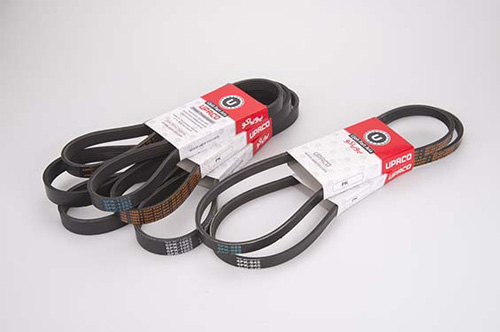
About one-third of the electric or mechanical motors in the industrial and commercial sectors use belt drives. Belt drives provide flexibility in the positioning of the motor relative to the load. Pulleys (sheaves) of varying diameters allow the speed of the driven equipment to be increased or decreased. A properly designed belt transmission system provides high efficiency, decreases noise, requires no lubrication

The majority of belt drives use V-belts. V-belts use a trapezoidal cross section to create a wedging action on the pulleys to increase friction and improve the belt’s power transfer capability. Joined or multiple belts are specified for heavy loads. V-belt drives can have a peak efficiency of 95% to 98% at the time of installation. Efficiency is also dependent on pulley size, driven torque, under or over-belting, and V-belt design and construction.

Synchronous belts (also called timing, positive-drive, or high-torque drive belts) are toothed and require the installation of mating toothed-drive sprockets. Synchronous belts offer an efficiency of about 98% and maintain that efficiency over a wide load range. Synchronous belts require less maintenance and redesigning, operate in wet and oily environments, and run slip-free.

© Copyright 2009 Ujeh Part Aria Co. All Right Reserved. Design by : داده نگار - مرکز تخصصی طراحی وب سایت